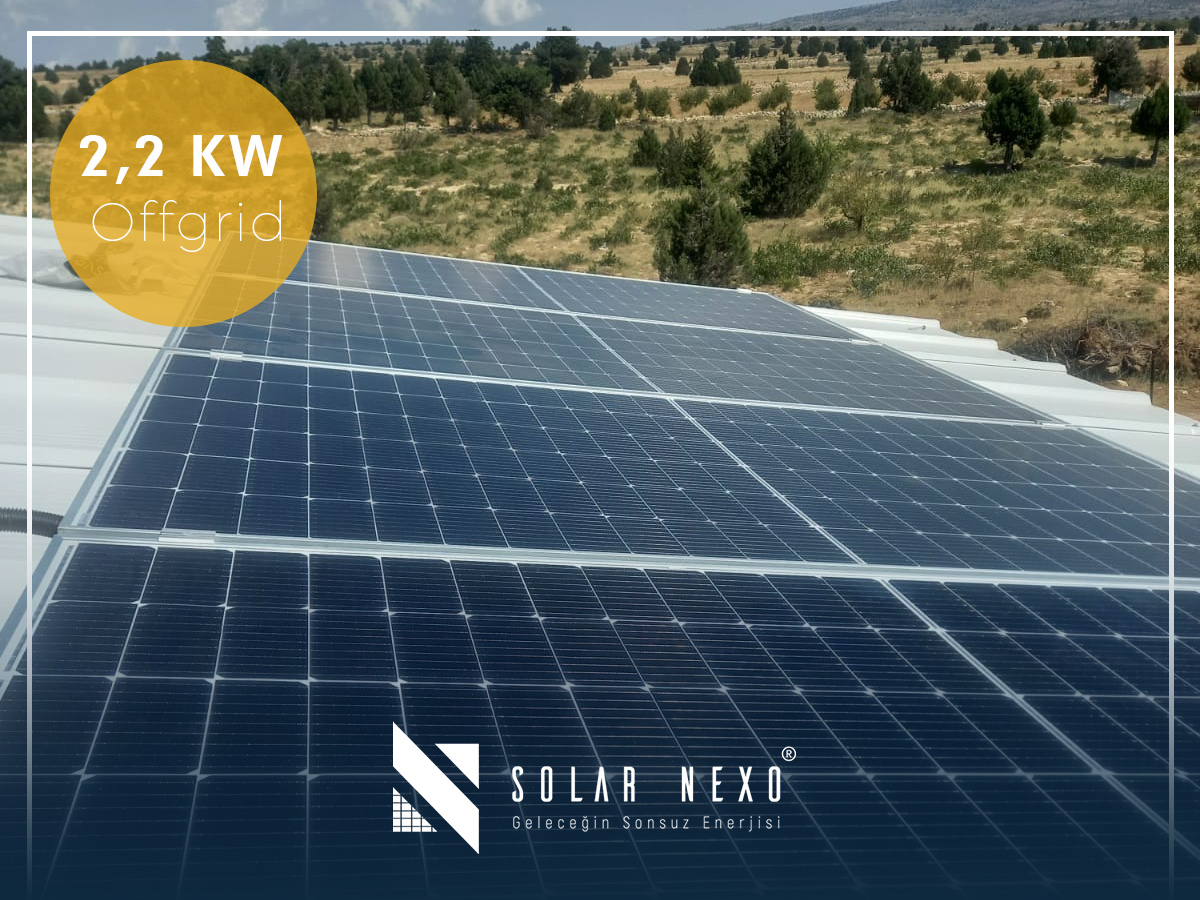
Cut operating costs for your hotel, factory, office or retail centre with a professionally installed commercial solar system.
Antalya's economy — driven by tourism, manufacturing and agriculture — is energy intensive. Commercial electricity in Turkey carries additional levies that make it particularly expensive. A properly sized commercial solar system can reduce a business's electricity bill by 50–90%, improving cash flow and competitive position significantly.
We have completed commercial solar projects for 5-star hotels in Alanya and Belek, manufacturing facilities in Kepez, cold storage facilities in Serik, supermarkets and shopping centres across the province. Our largest single commercial project to date is a 500 kWp hotel installation.
Year-round solar generation matching peak tourism demand. Reduce cooling and laundry energy costs.
Factories consume large daytime loads that align perfectly with solar generation profiles.
Large flat roofs ideal for solar. Reduce refrigeration and lighting energy costs substantially.
Daytime occupation matches solar generation. Excellent building energy performance rating.
| Parameter | Value |
|---|---|
| Minimum System Size | 30 kWp |
| Maximum System Size | Unlimited (modular) |
| Panel Type | Monocrystalline / Bifacial PERC |
| Inverter | Huawei SUN2000 / Fronius / SMA (3-phase) |
| Monitoring | Commercial SCADA / FusionSolar |
| Grid Connection | LV (≤630 kWp) / MV (>630 kWp) |
| Metering | Smart bidirectional meter |
| EPDK Licence | Required ≥50 kWp (managed by us) |
A 100 kWp hotel rooftop system costs approximately ₺1.3M all-in and generates 155,000 kWh per year. At commercial electricity rates of ₺4.20/kWh, this delivers ₺651,000 in annual savings. Payback: under 2 years. 20-year NPV: over ₺12 million. Corporate solar is one of the highest-return capital investments available to Turkish businesses today.
Yes. We work with Turkish banks offering green energy loans at favourable rates (typically 1–2% below standard commercial rates). We can introduce you to lenders who specialise in solar project financing. Many clients achieve cash-flow positive installations from day one with the right financing structure.
We provide full carbon offset documentation and annual energy generation reports suitable for ESG reporting, EU taxonomy requirements and GreenStar hotel rating applications. Solar energy is increasingly required for international hotel certifications.
We have completed single-site installations up to 1.2 MWp. For larger projects we partner with specialist EPC contractors while remaining the lead and local partner. There is no upper limit to what we can manage end-to-end.
We'll produce a full financial model — investment, savings, payback, IRR and NPV — for your business premises at no cost.
For energy-intensive businesses, a commercial solar system is more than a cost-cutting measure — it is a strategic investment in energy security. Large consumers such as factories, shopping centres, logistics hubs, hotels and hospitals strengthen their competitiveness by insulating themselves from volatile grid tariffs. Businesses operating in Antalya enjoy an additional advantage: peak summer demand and peak solar generation line up almost perfectly, so the season in which you consume the most energy is also the season in which your system produces the most.
Several pieces of regulation make commercial solar investment attractive in Türkiye:
On commercial projects, the EPC (Engineering, Procurement, Construction) contracting model brings both risk and management burden under a single point of control. The process runs through the following stages:
On commercial-scale systems, SCADA platforms such as Huawei FusionSolar, SolarEdge or equivalent go live alongside the installation. These platforms:
For businesses working to reduce their carbon footprint as part of corporate sustainability reporting, solar is one of the most tangible actions available. A 100 kWp system avoids roughly 155 tonnes of CO₂ emissions each year — a figure that can be reported as a verifiable impact under ISO 14001, GRI or CDP frameworks. For exporters facing pressure from international clients or supply-chain partners, this can also become a condition of market access.